
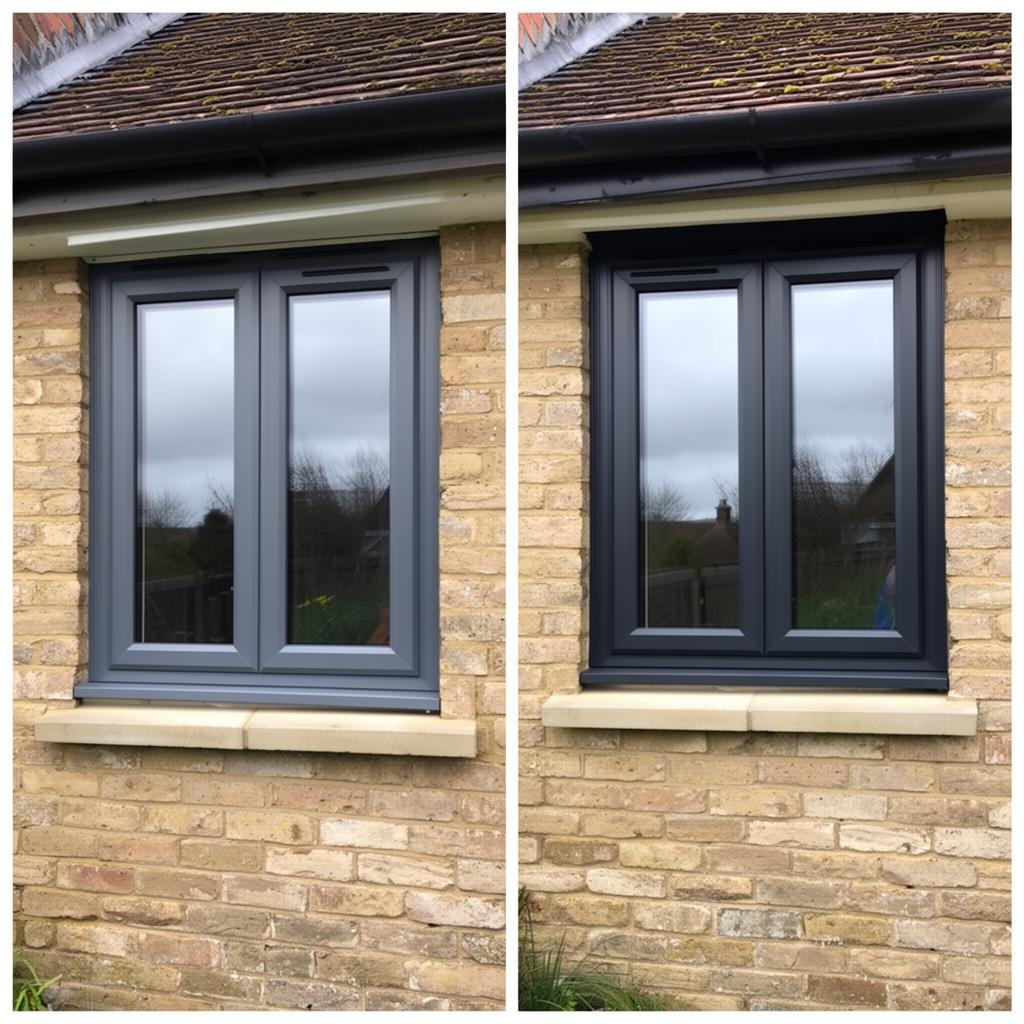
Window Spraying: What to Expect
A plain account of how on-site spraying works, from colour choice to the final check.
When your windows are sprayed on site, they stay in the wall the whole time: the frames are cleaned, everything around them is masked, the surface is keyed and primed, and a 2-pack coating is sprayed on before the masking comes off and the windows are checked. For a typical home it is measured in days rather than weeks, with far less disruption than replacement.
We spray uPVC and aluminium window frames for homes and businesses across Devon, Cornwall, Dorset and Somerset. Here is what happens at each stage, so you know what to expect before we arrive.
Before the day: survey and colour
A free survey checks that the frames are sound enough to be worth spraying, notes any repairs that should be done first, and agrees the colour. Frames that are failing mechanically are better repaired or replaced, and we will say so. Colour is usually chosen from a RAL reference, and seeing a sample against your brickwork or render in daylight is always worthwhile.
Step by step on site
Preparation takes more time than spraying. It is also what decides whether a finish lasts, which is why it should never be rushed.
- Protection laid down inside and out where access is needed
- Frames cleaned and degreased to remove dirt, silicone residue and oxidation
- Glass, seals, brickwork and surrounding surfaces masked
- Surface keyed so the new coating can grip
- Primer applied where the substrate requires it
- 2-pack coating sprayed in controlled coats
- Masking removed, edges checked and any touch ups completed
Weather and access
Exterior spraying depends on dry conditions and sensible temperatures, so dates can move if the forecast turns. Upstairs frames are normally reached with ladders or towers, and we will ask about parking and access for equipment beforehand. On commercial buildings, work can be phased around trading hours.
Living in the house while it happens
Because nothing is removed, rooms stay usable. Windows may need to stay closed for a period while the coating cures, and we will tell you when they can be opened and operated normally. Modern coatings are applied with extraction and masking to keep overspray and odour under control.
Aftercare
Give the new finish time to harden fully before washing it. After that, clean with warm water and a mild detergent using a soft cloth, and avoid abrasive pads or solvent cleaners. On coastal homes a rinse after stormy spells stops salt building up. Keep drainage slots clear and check seals as part of ordinary window care.
Is spraying right for your windows?
Spraying is ideal when frames work well but look dated, faded or the wrong colour. It is not a fix for draughts caused by worn seals, misted units or dropped sashes, although those can often be repaired first. If you are unsure, our respray or replace guide sets out how to decide.
Questions worth asking beforehand
Ask what preparation is included, which coating will be used, how glass and seals are protected, and what happens if the weather changes on the day. Check whether handles and hinges will be masked or removed, and how long you should wait before washing the frames. Clear answers to those questions are usually a good sign that the finish will be applied with care and will last.
Questions people ask
Do my windows have to be removed to be sprayed?
No. They are sprayed in place after cleaning, masking and preparation.
What paint is used?
A 2-pack coating applied on site over a properly prepared and, where needed, primed surface.
Can you spray in any weather?
Exterior work needs dry conditions, so dates can move if the weather turns.
Is the survey free?
Yes, free and with no obligation.
Get a free, no pressure survey
We measure, advise on the right option for your property and put the price in writing. Every installation and spray project carries our 10 year guarantee.
Ready to start your project?
Free quotes · 10-year guarantee · Friendly local service.