uPVC vs Timber vs Aluminium, Honestly Compared
Three good materials, three different jobs. Here is how we choose between them on real surveys.
There is no single best window material. There is a best material for a particular building, budget, exposure and planning situation, and the honest comparison is the one that admits where each option loses.
We fit all three, so we have no reason to push you toward one. The notes below are the same ones we talk through at survey.
uPVC: the value and low maintenance choice
Modern multi chamber uPVC is thermally excellent for the money and needs nothing but washing. Flush casement profiles have closed much of the aesthetic gap with timber, and foiled heritage colours hold up well in the South West climate.
Where it loses: sightlines are chunkier than aluminium, and a conservation officer may refuse it on a listed frontage.
Engineered timber: the heritage and premium choice
Engineered laminated hardwood is far more stable than solid softwood, holds factory microporous paint for years and accepts slim double glazed units without ruining period proportions. It is the usual answer for listed buildings and conservation frontages.
Where it loses: it is the most expensive option and it needs recoating in time, typically every eight to ten years on exposed elevations.
Aluminium: the slim and structural choice
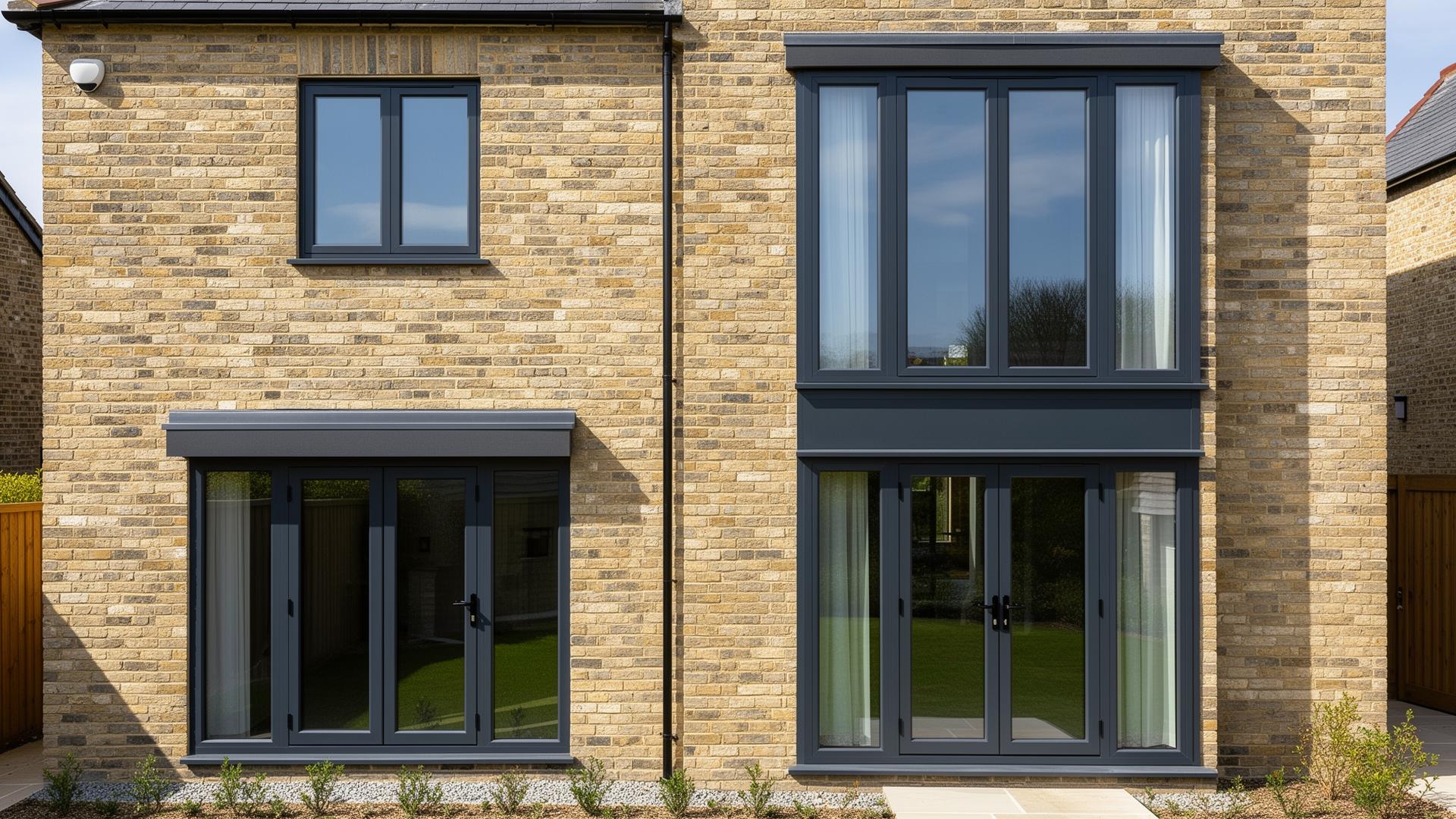
Aluminium carries big glass on small frames, which is why it dominates contemporary extensions and large openings. Powder coated finishes are extremely durable and it is dimensionally rock solid.
Where it loses: cost sits between uPVC and timber, and on a small cottage window the crisp modern look can be wrong for the building.
Choosing by property type
- Listed or conservation frontage: engineered timber, slim units, heritage colour
- Period cottage, no planning constraint: timber or uPVC flush casement
- Nineteen sixties to nineteen nineties estate housing: uPVC casement
- Contemporary extension or large picture window: aluminium
- Coastal exposure: uPVC or marine grade powder coated aluminium
- Rental property: uPVC for the maintenance profile
Questions people ask
Which lasts longest?
Engineered hardwood frames can pass sixty years with maintenance. Good uPVC runs twenty five to thirty five years, aluminium similar or longer. Sealed units are the shorter lived part of any window.
Can I mix materials on one house?
Yes, and it is common. Timber on the road facing elevation for planning reasons and uPVC at the rear is a normal, sensible compromise.
Which is warmest?
With equivalent glazing the differences are small. Frame material matters less than the sealed unit, the spacer bar and the quality of the fit.
What about timber effect uPVC?
Grained foils are convincing at a distance and fine for most homes. Close up on a period frontage a conservation officer will still see the difference.
Get a free, no pressure survey
We measure, advise on the right option for your property and put the price in writing. Every installation and spray project carries our 10 year guarantee.
Ready to start your project?
Free quotes · 10-year guarantee · Friendly local service.