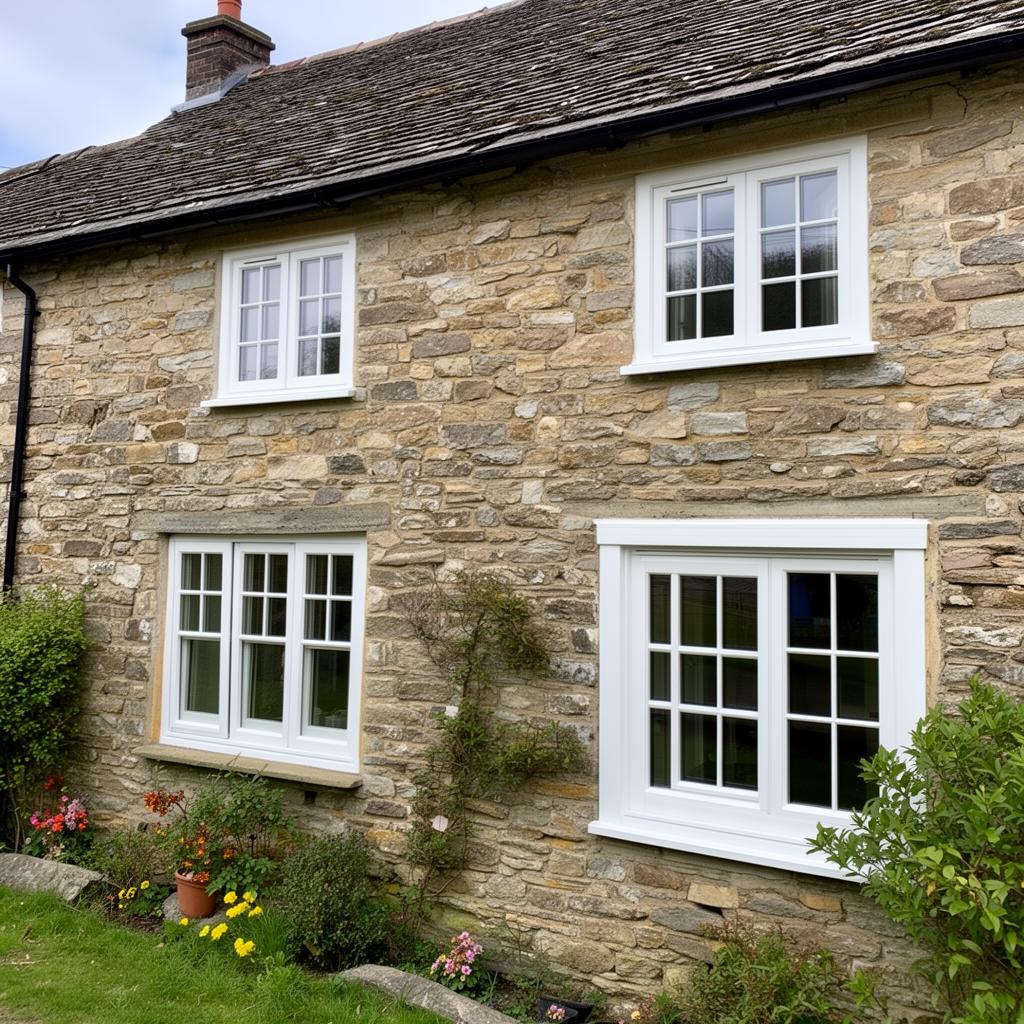
Faded uPVC Windows
Chalky, yellowed or washed out frames rarely need replacing if they still work.
Faded uPVC windows can usually be restored without replacing them: a deep clean removes surface chalking, and where the colour itself has gone, frames that still open, lock and seal properly can be resprayed on site with a 2-pack coating that gives them a fresh, durable finish in the original colour or a new one.
Fading is one of the most common reasons people in Devon, Cornwall, Dorset and Somerset ask us about their windows, particularly on south facing and coastal elevations. This guide explains why it happens and how to decide between cleaning, respraying and replacement.
Why uPVC fades
Sunlight breaks down the surface of uPVC and of woodgrain foils over time. White frames tend to chalk or yellow, while coloured and woodgrain frames lose depth and turn patchy, often worst on the elevation that faces the sun. Salt spray and wind blown grit on the coast speed this up. Harsh cleaning products can also strip the surface layer and make the dullness worse.
Try a proper clean first
Wash a small, out of sight area with warm water and a mild detergent using a soft cloth. If the colour comes back once it is dry, the problem was surface dirt and oxidation rather than true fading, and a thorough clean of every frame may be all you need. Avoid scouring pads, bleach and solvent cleaners: they give a brief improvement and then leave the surface rougher, so it collects dirt faster.
When the colour has gone for good
If cleaning leaves frames still dull, blotchy or yellow, the colour has degraded in the material and needs a new finish. That is where on-site spraying comes in. The frames are cleaned and degreased, surrounding glass, brickwork and seals are masked, the surface is keyed and primed, and a 2-pack coating is applied. The windows stay in place, so there is no disturbance to plaster or reveals.
Spraying also gives you the option to change colour at the same time, for example from faded white or brown woodgrain to a modern grey.
When replacement is the better answer
Spraying renews the surface, not the mechanism. If frames are also draughty, units have misted, hinges are failing or the frame is cracked, it makes more sense to weigh replacement against a combination of repairs and spraying. We quote the routes that genuinely apply rather than defaulting to new windows.
Keeping frames looking good
The same gentle routine suits resprayed frames, and it helps any finish last as long as possible.
- Wash frames a few times a year, more often near the sea
- Use mild detergent and a soft cloth, never abrasives
- Rinse off salt deposits after storms on coastal homes
- Keep drainage slots and gaskets clean
Matching new and old frames
Fading becomes most obvious when one new window is added next to older frames, because the difference in tone is suddenly side by side. Rather than replacing everything to get a match, the older frames can be sprayed to the same colour as the new ones, or every frame sprayed together so the whole elevation reads as one. Taking a colour reference from the newest frame gives the closest result.
Questions people ask
Can faded uPVC windows be restored?
Yes. Surface chalking often cleans off; genuinely faded frames can be resprayed on site with a 2-pack coating.
Can I paint faded uPVC myself?
Ordinary household paint does not bond well to uPVC and tends to peel. A professional system relies on correct preparation, primer and a 2-pack coating.
Do the windows have to come out to be sprayed?
No. They are masked and sprayed in place.
Should I replace or respray faded windows?
Respray if the frames still work and seal well; consider replacement if they are also failing mechanically.
Get a free, no pressure survey
We measure, advise on the right option for your property and put the price in writing. Every installation and spray project carries our 10 year guarantee.
Ready to start your project?
Free quotes · 10-year guarantee · Friendly local service.